The Complete Guide to AI-Powered Truck Dispatch Services in 2025
How AI dispatch works, the ROI fleets see, and what to consider when adopting it.
In the fast-paced world of freight and logistics, efficiency is not just a goal; it’s the bedrock of profitability. For decades, truck dispatching has been a complex dance of phone calls, load boards, and manual coordination. However, the industry is now undergoing a seismic shift, driven by the transformative power of Artificial Intelligence (AI). As we move further into 2025, AI-powered truck dispatch services are no longer a futuristic concept but an essential tool for fleets aiming to stay competitive. This guide provides a comprehensive overview of this technology, exploring how it works, its tangible benefits, and what to consider when adopting an AI-driven solution like Aura Dispatch.
The Modern Truck Dispatch Dilemma
Traditional dispatching is fraught with challenges that directly impact a fleet’s bottom line. Dispatchers are often overwhelmed, juggling multiple load boards, negotiating rates, tracking drivers, and managing paperwork. This manual process is not only time-consuming but also prone to human error. Key pain points include:
- High Deadhead Miles: Trucks running empty between loads represent a significant loss of revenue.
- Suboptimal Load Matching: Manually sifting through thousands of available loads makes it nearly impossible to consistently find the highest-paying, most efficient routes.
- Reactive Problem-Solving: Issues like traffic, delays, and vehicle maintenance are often addressed as they occur, leading to costly downtime.
- Dispatcher Burnout: The high-stress, multi-tasking nature of the job can lead to high turnover and inconsistent performance.
These inefficiencies create a ceiling on a fleet’s potential earnings and growth. The core problem is data overload; the sheer volume of information on loads, rates, routes, and driver availability is too vast for any human to process optimally in real-time.
The Evolution to AI-Powered Dispatch
AI-powered dispatch automation represents the next logical step in the evolution of logistics technology. It moves beyond simple digitization to introduce intelligent decision-making into the dispatch process. While earlier software helped organize information, AI actively analyzes it to provide recommendations and automate complex tasks.
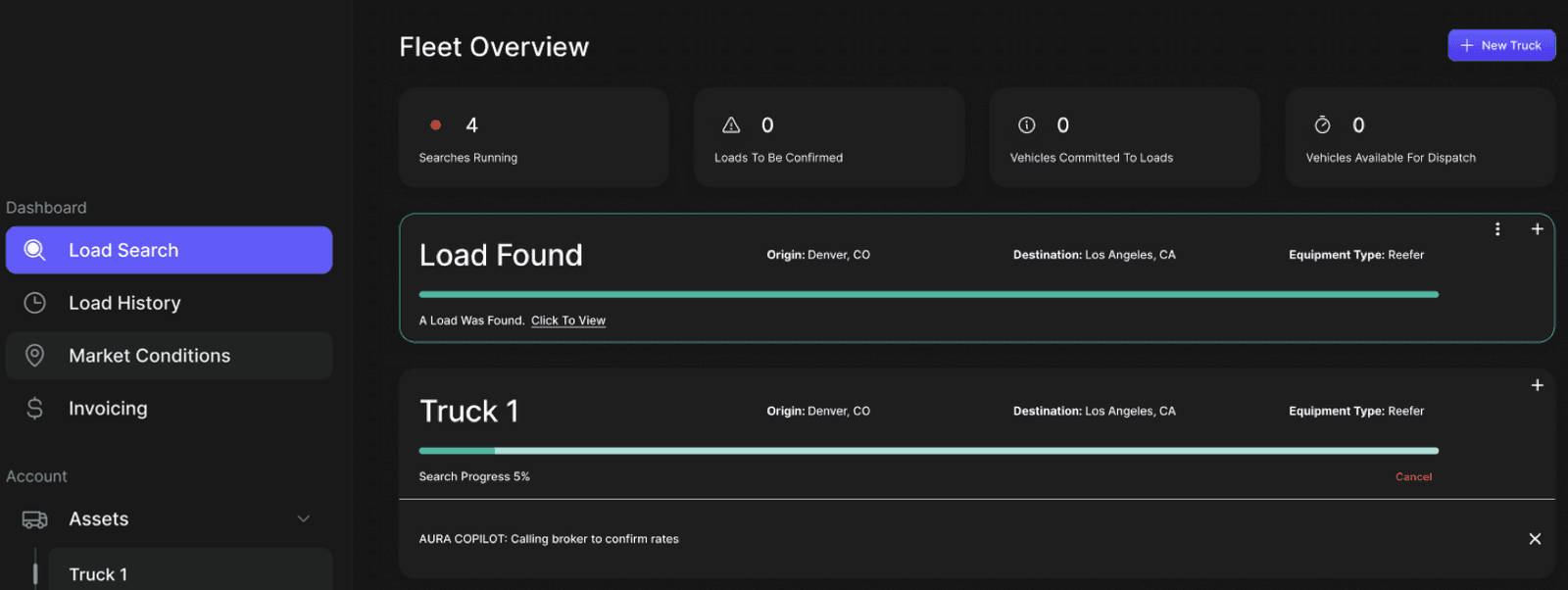
An AI dispatch system, such as Aura Dispatch, analyzes thousands of data points simultaneously—far beyond human capacity. It considers variables like deadhead, lane history, weight, truck type, driver hours-of-service (HOS), and real-time market rates to identify the most profitable opportunities for your fleet.
This technology transforms the role of a dispatcher from a reactive coordinator to a strategic operator. By automating the tedious work of searching for and booking loads, AI frees up dispatchers to focus on high-value activities like building broker relationships, managing driver needs, and overseeing fleet strategy.
How AI Dispatch Software Works
At its core, an AI dispatch platform connects to multiple data sources to create a holistic view of the freight market and your fleet’s operations. The process can be broken down into several key functions:
| Feature | Description | Benefit for Fleets |
|---|---|---|
| Smart Load Matching | The AI engine continuously scans integrated load boards and private broker networks, filtering and ranking loads based on your fleet’s specific preferences and profitability goals. | Finds higher-paying loads faster, reduces time spent searching, and minimizes bias. |
| Automated Bidding | The system can be configured to automatically bid on or book loads that meet predefined criteria, securing opportunities before competitors can react. | Increases booking speed and captures high-value loads that disappear quickly. |
| Lane Optimization | By analyzing historical data and market trends, the AI recommends the most consistently profitable lanes and helps avoid those with low rates or high competition. | Improves revenue per mile and establishes more predictable income streams. |
| Deadhead Reduction | The platform proactively searches for backhauls and triangular routes, ensuring that trucks spend minimal time running empty. | Significantly boosts truck utilization and overall profitability. |
| Predictive Analytics | AI algorithms can forecast market rate fluctuations, predict traffic patterns, and even anticipate potential maintenance issues, allowing for proactive planning. | Enables smarter decision-making, reduces unexpected downtime, and improves ETAs. |
The Tangible ROI of AI Dispatch Automation
Adopting an AI-powered dispatch service is not just about technological advancement; it’s a strategic business decision with a clear return on investment (ROI). Fleets that embrace this technology typically see improvements across several key performance indicators:
- Increased Revenue Per Truck: By consistently securing higher-paying loads and minimizing empty miles, fleets can significantly boost their weekly and monthly earnings.
- Reduced Operational Costs: Lower fuel consumption from optimized routing and reduced administrative overhead contribute directly to the bottom line.
- Enhanced Dispatcher Efficiency: A single dispatcher can manage a larger number of trucks more effectively, allowing for scalable growth without a linear increase in headcount.
- Improved Driver Satisfaction: Better-planned routes, reduced waiting times, and more consistent work lead to higher driver morale and lower turnover.
Implementing an AI Dispatch Solution
Transitioning to an AI dispatch system requires a thoughtful approach. Here are key steps to consider:
- Evaluate Your Needs: Assess your current dispatching process and identify the most significant pain points. Are you struggling with deadhead, low rates, or dispatcher overload?
- Choose the Right Partner: Look for a provider like Aura Dispatch that offers a user-friendly interface, robust features, and strong customer support. Ensure their technology aligns with your fleet’s size and goals.
- Integrate and Train: The system should integrate seamlessly with your existing tools, such as your Transportation Management System (TMS) and ELD provider. Proper training is crucial to ensure your dispatchers understand how to leverage the AI’s capabilities effectively.
- Monitor and Optimize: Continuously monitor the system’s performance and work with your provider to fine-tune the AI’s parameters to match your evolving business strategy.
The Future of Freight is Intelligent
The adoption of AI in the trucking industry is accelerating. As the technology becomes more sophisticated, we can expect to see even greater levels of automation, from fully autonomous dispatching to integrated supply chain management. Fleets that invest in AI-powered truck dispatch services today are not just solving immediate operational challenges; they are positioning themselves to be leaders in the more efficient, data-driven, and profitable logistics landscape of tomorrow.
References
- Aura Dispatch
- Trucking Industry Trends 2025